Truckers of Europe 3
- 4.3
- Rating
- 100.00M
- Installs
- Free
- Price
 Analysis by App-foxy
I approached Truckers of Europe 3 expecting a straightforward driving game, but its appeal is more specific than that. This is a simulation game from Wanda Software that puts the focus on the everyday rhythm of handling a truck rather than on quick arcade rounds. You choose a route, manage a large vehicle, and spend time learning how to make heavy transport feel controlled instead of clumsy.
That distinction matters. If you want instant action, exaggerated crashes, or a racing game with trucks, this may feel slow. If you enjoy the satisfaction of lining up a turn, keeping a long vehicle stable, and gradually becoming more comfortable with road decisions, it has a much stronger chance of fitting your taste. I found it most enjoyable when I treated each trip as a small driving session rather than something I needed to rush through.
The game is free to download and is suitable for Everyone. It has reached over 100 million installs, with a 4.3 average from around 674 thousand ratings and about 4.9 thousand written reviews. Those figures suggest that the basic idea has connected with a very large audience, although popularity alone does not guarantee that its slower simulation style will suit every player.
You May Also Like

 AccuWeather: Weather Radar
AccuWeather Review: A Quick, Clear Forecast for Everyday Decisions
For everyday plans, the best forecast is the one you can understand quickly. AccuWeather makes rain timing, radar, and local conditions easy to act on, with a few trade-offs.

 Hill Climb Racing
Why Hill Climb Racing Still Turns Crashes Into One More Run
A tiny car, a bumpy hill and one more upgrade: Hill Climb Racing keeps resurfacing because its simple chaos makes every near-miss feel personal.

 AliExpress - Shopping App
AliExpress Makes Global Shopping Feel Personal, but Shoppers Bear the Risk
AliExpress turns a global marketplace into a pocket-sized discovery engine. Its reach is useful, its shopping loop compelling, and its trade-offs easy to miss.

 Lords Mobile: Kingdom Wars
Lords Mobile Is a Kingdom-Building Routine, Not a Quick Match
A case-by-case verdict on the building, battles, device demands, and social commitments that make Lords Mobile rewarding for some players and exhausting for others.

 PDF Scanner app - TapScanner
TapScanner Makes Paperwork Easier to Capture, Check, and Share
TapScanner makes scanning with a phone feel less like a rescue operation and more like a dependable step in getting work done. Its capture tools are useful, though not flawless.

 Block Blast!
 Shows How Much a Puzzle Game Can Leave Out
A quiet grid game shows why puzzle players increasingly value instant clarity, repeatable skill and low-pressure play—and where the genre still needs to catch up.
More From Our News Desk
View All News


What the driving experience feels like
The first thing I noticed is that the truck changes the way I think about movement. A small vehicle can turn quickly and recover from a mistake almost immediately. A truck asks for earlier decisions. I had to think about the angle of a corner, the space beside the vehicle, and how much room I would need before committing to a maneuver. That extra weight is the central attraction, not an obstacle the game tries to hide.
The controls take some adjustment because the challenge is not simply pointing in the direction I want to go. Smooth steering is more useful than constant corrections, and braking too late can turn an ordinary bend into an awkward recovery. I recommend beginning with short, uncomplicated drives and concentrating on staying calm. Trying to drive aggressively before understanding the vehicle usually creates more frustration than progress.
One useful habit is to slow down before a turn rather than while already inside it. This sounds obvious, but it changes the whole session. Entering a bend at a manageable speed gives me time to correct the line, while braking halfway through often makes the truck feel less predictable. I also found that leaving extra space is more valuable than trying to take the tightest possible route.
The game works best when I accept that not every moment needs to be exciting. A long stretch of road can be relaxing, especially when I want something quieter than a conventional racing title. The trade-off is that players looking for constant rewards or rapid challenges may interpret the same pacing as empty. The simulation mood is its strength for patient players and its biggest barrier for everyone else.
Learning the rhythm instead of chasing speed
My most reliable approach was to divide a drive into three parts: preparation, steady travel, and careful arrival. Before moving, I considered the route and the kind of turns ahead. During the main stretch, I focused on consistent steering rather than dramatic speed. Near the destination, I became more cautious because the final maneuver can undo an otherwise clean trip.
This workflow also makes the game easier to play in ordinary life. If I had a short break, I could use it for a focused drive instead of starting a session that demanded constant attention. When I had more time, I could settle into the slower pace and treat the trip as a relaxing simulation. That flexibility is one of the reasons I would recommend it to people who enjoy vehicle games but do not always want competitive racing.
Another practical tip is to use mistakes as information. If a corner goes badly, I try to identify whether I entered too quickly, turned too late, or misjudged the truck’s width. Repeating the same route with one adjustment is more productive than simply restarting and driving in exactly the same way. The game rewards observation more than impatience.
Progress, pressure, and the role of spending
Because this is a free game, the question of spending naturally comes up. The listed in-app purchase range is from $0.99 to $4.99 per item. I see that as a reason to approach the game with a clear personal rule: enjoy the driving first, then decide whether any optional purchase genuinely improves the way you play. I would not install it assuming that spending is necessary to understand its core appeal.
The important distinction is between paying to remove inconvenience and paying because the driving itself has stopped being enjoyable. If I am already having fun with the basic loop, a small optional purchase may feel reasonable. If I am bored by the pace or uncomfortable with the controls, spending will not solve the underlying problem. That is a useful test for any free simulation game.
I also prefer not to treat every unlock or improvement as a requirement. The pressure to progress can make a calm driving game feel like a checklist, especially when I start measuring every session by what it gives me next. My better experiences came when I chose a simple objective, such as practicing smoother turns or completing a trip without unnecessary corrections, rather than constantly looking for the fastest route to the next reward.
For younger players, the Everyone rating makes the game broadly accessible, but free-to-play spending still deserves adult attention. I would keep purchase decisions deliberate, particularly on a shared device. The sensible approach is to regard the game as free to try, not as a guarantee that every optional element will remain free.
At the same time, I do not think the purchase range alone proves that the game is unfair. There is no reason to assume that paying automatically makes a player better at handling the truck. Driving judgment still matters, and a player who rushes, turns poorly, or ignores vehicle space can create problems regardless of spending. That is why I judge the game more by the quality of its driving loop than by the existence of optional purchases.
Is it competitive, and does spending decide the result?
I would not choose this title primarily for competitive fairness in the way I would choose a head-to-head racing game. Its strongest identity is personal driving and simulation, so the main comparison is between my decisions today and my decisions yesterday. That makes the experience less stressful than a game where every mistake is immediately measured against another player.
From my perspective, the most meaningful form of competition is self-improvement. Can I take a familiar corner with less hesitation? Can I complete a route while keeping my steering controlled? Can I avoid turning a small error into a chain of corrections? These goals make the game feel fair because they depend on practice and attention rather than reflexes alone.
Spending becomes more concerning when a game makes non-paying players feel deliberately blocked. I would pay attention to whether optional items merely broaden the experience or whether they create pressure to keep paying. Since the available purchase information identifies the price range but does not establish how every item affects progression, I would make a cautious decision after playing rather than assuming either extreme.
That uncertainty is worth handling honestly. I would not describe the game as pay-to-win, because the available facts do not establish a competitive system where purchases decide victories. I also would not promise that every part of progression feels equally generous without personally testing each purchase path. For a reader deciding whether to try it, the practical conclusion is simple: download it for the truck simulation, and treat spending as optional until the basic driving has earned your confidence.
Where it differs from other driving choices
Compared with an arcade racing game, this experience asks for patience instead of immediate reaction. Arcade games are usually better when I want short bursts of speed, dramatic overtakes, and a clear winner. This game is better when I want the vehicle itself to shape the session. The truck’s size creates a different kind of tension, built around positioning and anticipation.
Compared with a highly detailed desktop simulator, it is more approachable as a mobile game. I can pick it up without committing to a lengthy technical setup, and the free entry makes trying the driving style easy. The compromise is that mobile play can feel less comfortable for long sessions, especially if I am holding the device in a position that makes fine steering tiring.
It also differs from casual truck games that use the vehicle mainly as a visual theme. Here, the truck is the reason to play. If I remove the need to plan turns and manage momentum, much of the appeal disappears. That means someone who only wants trucks as decoration may find a simpler driving game more satisfying.
My advice is to choose based on the mood you want. Pick this one for deliberate transport-style driving. Choose an arcade alternative for speed and spectacle. Choose a deeper simulator on another platform if you want a more demanding long-term hobby and have the time and equipment for it. The game does not need to win all three comparisons; it only needs to deliver its particular version of truck driving well enough.
Small techniques that make sessions smoother
I found three habits especially useful. First, I avoided making large steering movements when a small correction would do. The truck responds better to planning than to panic. Second, I treated the arrival phase as part of the drive rather than as an afterthought. A careful final approach is often more satisfying than a fast journey followed by a messy finish.
Third, I used repetition intentionally. Instead of repeating a route without reflection, I changed one behavior at a time: lower entry speed, earlier steering, or more room on the outside of a turn. This turns a vague feeling of difficulty into a practical lesson. It is a small technique, but it gives the simulation more depth than simply trying to complete trips as quickly as possible.
A fourth tip is to play when you can give the road your attention. This is not ideal background entertainment if you are constantly switching between apps or trying to multitask. The slower pace may look relaxing, but the vehicle still needs concentration during turns and corrections. Short, focused sessions are better than a long session played impatiently.
There is also a useful distinction between a mistake that teaches and a mistake caused by fatigue. If I notice that I am repeatedly overcorrecting, I stop rather than blaming the game. Simulation controls can feel much harsher when I am distracted. Returning later often makes the same section feel manageable, which is a reminder that the game rewards a calm mindset.
Device expectations and long-term appeal
The minimum operating system is Android 6.0, so the compatibility threshold is relatively broad for Android users. The current version is 0.7.64, and I would keep the game updated through the normal store process so that I am using the current release available for my device. Compatibility is only one part of the experience, though; screen comfort and control responsiveness matter just as much for a driving game.
The game’s long-term appeal depends on whether I enjoy repeating the central act of driving. Players who need a constant stream of new mechanics may eventually feel that the routine becomes familiar. That is not necessarily a flaw, but it is a clear expectation to set. Simulation games often succeed through refinement, while some players measure value mainly through novelty.
I would especially recommend it to someone who likes vehicle videos, relaxed road games, or the feeling of mastering a machine gradually. It can also suit a player who wants a free way to test whether truck simulation is appealing before investing in a more complex alternative. I would skip it if my priority is multiplayer competition, instant action, or a very short session packed with rewards.
The developer, Wanda Software, has built the game around a recognizable fantasy: becoming comfortable behind a large truck and making ordinary road movement feel meaningful. That idea is easy to understand, but the execution only works if I accept the pace. The game cannot make every player enjoy careful driving, and it should not be judged as though it were trying to be a pure racer.
What I would want to know before installing
Is it genuinely free to start? Yes. The game is listed as free, so I can try the driving without paying an entry fee. Optional purchases range from $0.99 to $4.99 per item, which means I would keep spending separate from the decision to test the core experience.
Is it suitable for children? Its content rating is Everyone, making it broadly appropriate from a content-rating perspective. I would still handle purchases responsibly on a family device, because an age rating does not remove the need for sensible spending controls.
Will it suit someone who dislikes slow games? Probably not. The appeal comes from managing a large vehicle and improving through careful driving. If I want immediate acceleration, constant overtaking, or dramatic action, an arcade racer is likely a better choice.
Does it replace a full simulator? Not for every player. It offers a more accessible mobile starting point, but someone seeking the most demanding simulation experience may prefer a more specialized alternative. I see it as a practical middle ground: more deliberate than casual driving games, but easier to approach than a hobby that requires a dedicated setup.
Can I enjoy it without spending? I would begin with that assumption and judge the experience by the driving available before considering any purchase. The purchase range is clear, but the fair way to evaluate value is to see whether the basic sessions already feel worthwhile. If they do, spending is a choice rather than an obligation; if they do not, paying is unlikely to change my opinion of the driving itself.
My trust verdict
After spending time with it, I see Truckers of Europe 3 as a focused mobile simulation for people who enjoy control, patience, and gradual improvement. Its best moments are not about winning a spectacular race. They come from handling a difficult turn more cleanly, keeping a long vehicle composed, and finishing a route with the feeling that I made better decisions than before.
The free entry and Everyone rating make it easy to try, while the large install base shows that the concept has broad reach. Still, I would not recommend it blindly. The pace can feel too quiet, the controls demand practice, and players who want competitive action may be happier elsewhere. I would also keep purchases deliberate, using the $0.99-to-$4.99 range as a reminder to decide based on enjoyment rather than pressure.
My final recommendation is positive but specific: install it if the idea of driving a truck carefully sounds relaxing or satisfying. Start with short trips, slow down before turns, and judge progress by smoother decisions instead of speed alone. If you want a calm truck-driving routine rather than an arcade race, this is worth trying before you spend anything.
FAQs for Truckers of Europe 3
01What is the main objective of Truckers of Europe 3?
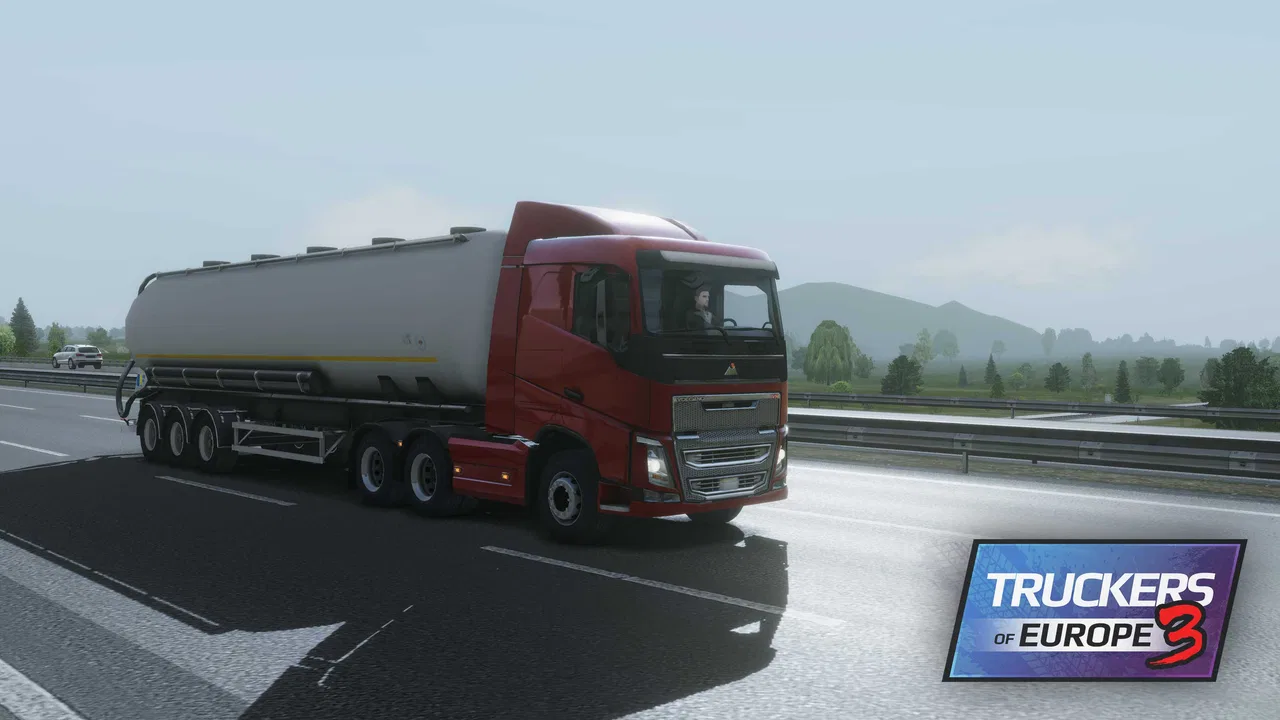
Truckers of Europe 3 is a realistic truck simulation game where players aim to build their trucking empire by completing various delivery missions across Europe. You can choose from a range of trucks, customize them, and navigate through detailed European roads and cities. The game focuses on offering an authentic trucking experience.
02How realistic are the graphics and gameplay in Truckers of Europe 3?
The game prides itself on high-quality graphics and realistic physics. It features detailed truck models, dynamic weather conditions, and a day-night cycle. The gameplay includes managing fuel, maintenance, and traffic rules, which adds to the immersive experience of driving across European landscapes.
03Are there customization options available for trucks in the game?
Yes, Truckers of Europe 3 offers extensive customization options. Players can modify their trucks with various paints, decals, and performance upgrades. This allows for a personalized experience, enabling players to tailor their trucks to their liking and improve their performance and aesthetic appeal.
04Does Truckers of Europe 3 require an internet connection to play?
Truckers of Europe 3 primarily offers offline gameplay, allowing players to enjoy the game without a constant internet connection. However, certain features, such as leaderboards or multiplayer options, may require an internet connection to access community features and updates.
05What are the system requirements for Truckers of Europe 3 on mobile devices?
To run Truckers of Europe 3 smoothly, an Android device should have at least 2GB of RAM and a modern processor. For iOS, an iPhone 6S or newer is recommended. The game is optimized for both platforms but may experience performance issues on older devices with less processing power.
Pros
- Realistic driving experience with detailed truck models.
- Expansive map with diverse European landscapes.
- Customizable trucks and upgrades for personalization.
- Intuitive controls suitable for all skill levels.
- Frequent updates with new features and improvements.
Cons
- Occasional minor bugs affecting gameplay.
- Requires a stable internet connection for best performance.
- Limited soundtrack variety could affect immersion.
- In-app purchases can be pricey for some players.
- Loading times can be lengthy on older devices.

Truckers of Europe 3
Gallery